Beyond the Bin: How Your Reusable Cup Became the Ultimate Symbol of Sustainable Living in 2025
Introduction: A Planet on Pause, One Cup at a Time
Imagine this: every single second, 676 cups of freshly made tea or coffee are consumed in China alone. In 2024, the total volume of ready-to-drink beverages is expected to surpass a staggering 50 billion cups, generating approximately 430,000 tons of plastic waste-
Globally, the picture is even grimmer, with less than 2% of single-use plastic coffee cups being recycled and each cup serving its purpose for a fleeting average of just 15 minutes before becoming trash-
These aren't just abstract statistics; they are the sobering reality of our convenience-driven culture. Yet, amidst this tide of waste, a powerful counter-current is rising. What began as a simple act—bringing your own cup—has evolved into a global lifestyle movement. The reusable cup is no longer just a container; it has become a potent symbol of personal values, a badge of eco-consciousness, and a tangible tool in the fight for a sustainable future. This article delves deep into the world of reusable cups in 2025, exploring the brands leading the charge, the psychology behind the habit, and the measurable impact of choosing reuse over waste.
Part 1: The Unseen Cost of Convenience
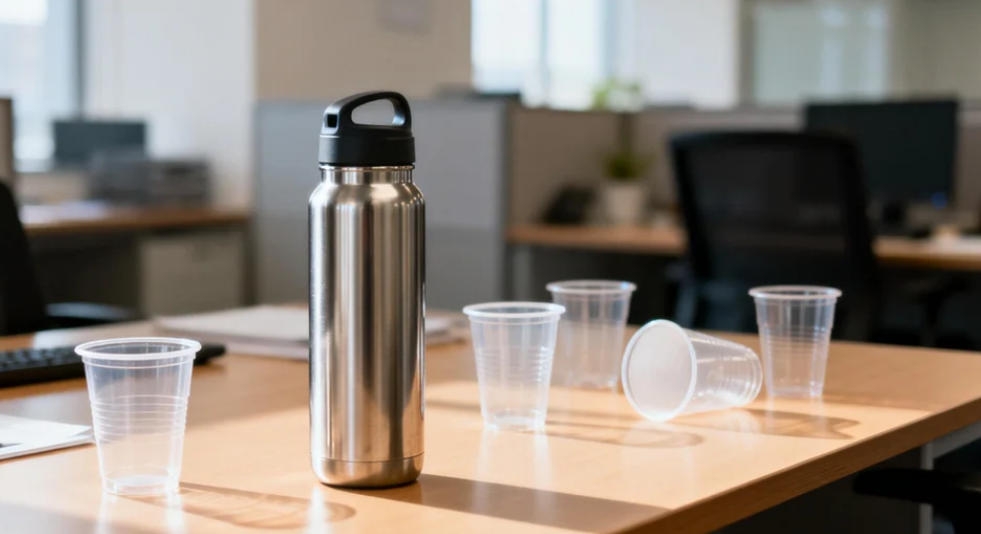
The environmental toll of disposable cups is a complex, multi-layered crisis.
The Waste Mountain: Beyond the 43,000 tons of plastic, many beverage cups feature "unnecessary packaging" like thick walls, decorative elements, and multi-layer sleeves, which can account for up to 30% of the cup's weight, unnecessarily amplifying the waste stream
The Carbon Footprint: The lifecycle of a disposable cup—from raw material extraction and manufacturing to transportation and, most often, landfilling—generates significant greenhouse gas emissions.
The Marine Menace: Plastic pollution does not disappear. An estimated 8 million tons of plastic enter our oceans annually, where it breaks down into microplastics, entering the food chain and threatening marine ecosystems-
This linear "take-make-dispose" model is fundamentally unsustainable. The shift towards a reusable system represents a critical pivot to a circular economy, where products and materials are kept in use for as long as possible.
Part 2: More Than a Mug: The Rise of the Conscious Cup Ecosystem
Today's reusable cup market is diverse and innovative, catering to every need and aesthetic.
1. The Material Revolution:
Gone are the days of just stainless steel. Brands are pioneering new frontiers:
Bio-Composites: Companies like Be Che (杯彻) are using bamboo fiber and plant-based materials to create cups that are not only ultra-lightweight (as light as 12 grams) but also boast superior insulation-
Circular Tech-Embedded Cups: The future is smart. Some cups now feature embedded NFC chips that track usage and connect to apps, turning a simple vessel into a hub for personal consumption data-
2. The System Solutions: Beyond Ownership
The trend is moving beyond personal ownership to convenient, systematic reuse:
Borrow-and-Return Programs: Major chains like Starbucks have implemented "Borrow A Cup" programs in over 25 global markets-3. Customers pay a small deposit for a durable, branded cup and return it to a designated drop-point for professional cleaning.
City-Wide Deposit Schemes: Pioneering cities like Aarhus, Denmark, have launched successful public systems. Customers pay a small deposit (around 75 cents) for a cup, which is refunded when returned to one of many city-wide automated collection stations, achieving return rates as high as 88%
Part 3: The Mind of the Re-user: Psychology and Persuasion
Adopting a reusable cup is a behavioral change. Understanding the drivers is key to mainstream adoption.
The "Green Premium" Acceptance: Contrary to assumptions, consumers are willing to invest in sustainability. Surveys show over 66% of Chinese consumers are willing to pay extra for reusable products, and over 74% accept deposit systems-
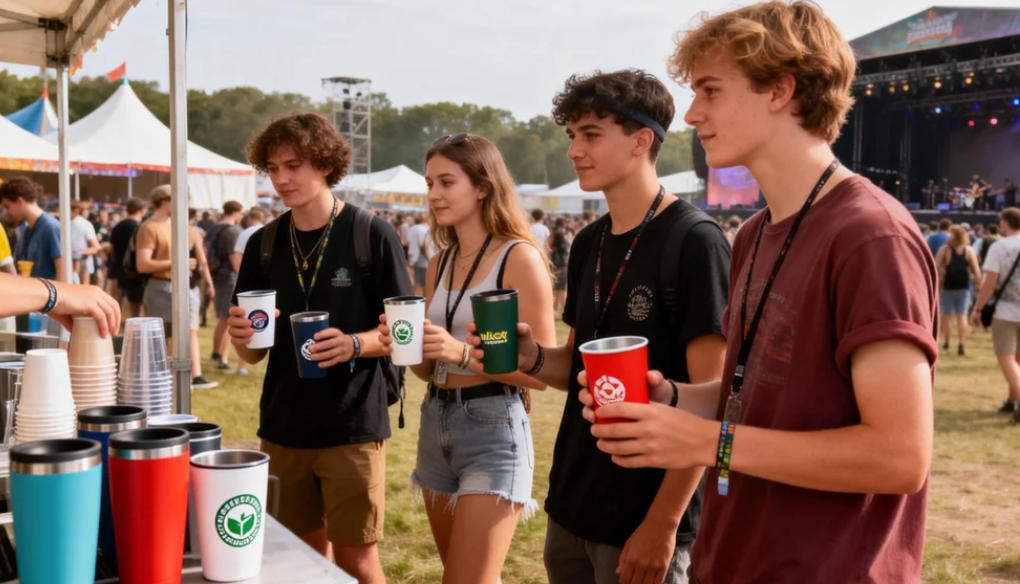
Identity and Community: A reusable cup acts as a "unique group symbol," allowing individuals to express their personality—be it as a "frugality expert," a "wellness guru," or a "dedicated environmentalist"-. This transforms a private act into a public statement and a point of community connection.
Habit Stacking for Success: The key is making the habit effortless. The "atomic habits" philosophy applies perfectly: by always placing your clean reusable cup in your bag next to your phone and keys (your new "essential trio"), you build a routine that becomes automatic
Part 4: Case Studies in Action: From Global Events to Local Streets
1. The Olympic-Scale Test: Paris 2024
The 2024 Paris Olympics aimed to be the "most sustainable Summer Olympics." Partnering with French company Re-uz, they deployed reusable cups across venues, serving millions of spectators. This large-scale experiment proved that with detailed planning and infrastructure (like Re-uz's network of 32 cleaning centers in France), waste-free major events are achievable
2. The Policy Pioneer: Taiwan's Ban
Since September 2024, Taiwan has fully banned disposable plastic beverage cups, forcing a systemic shift-5. This policy has accelerated the growth of "circular cup borrowing services," with major convenience stores, fast-food brands, and even universities participating in alliance-based reuse systems, making borrowing as easy as buying.
3. The Digital Enabler: China's "Good Cup New Life" Initiative
In China, platforms like Meituan are using technology to lower the barrier to entry. Their "Good Cup New Life · Bring-Your-Own-Cup" initiative features a "BYO Cup Supported" filter on its apps-10Consumers can easily find over 17,000 participating shops nationwide, and brands offer discounts or free drinks to incentivize use. This digital visibility solves the core problem of consumer uncertainty about where their cup will be accepte
Part 5: Your Journey Starts Here: A Practical Starter Guide
Ready to make the switch? Here’s how to begin effectively:
Audit Your Habits: Do you grab coffee on the go, or do you sit in a cafe? Your habit will determine the best cup (insulated travel mug vs. a ceramic cup).
Choose Your Champion: Select a cup you love. Consider material (glass, stainless steel, ceramic, bamboo), size, lid type (sealable for commuting), and ease of cleaning.
Master the Ritual: Get into the habit of washing your cup right after use and placing it immediately back in your bag or by the door. Use sticky notes or phone reminders until it becomes second nature.
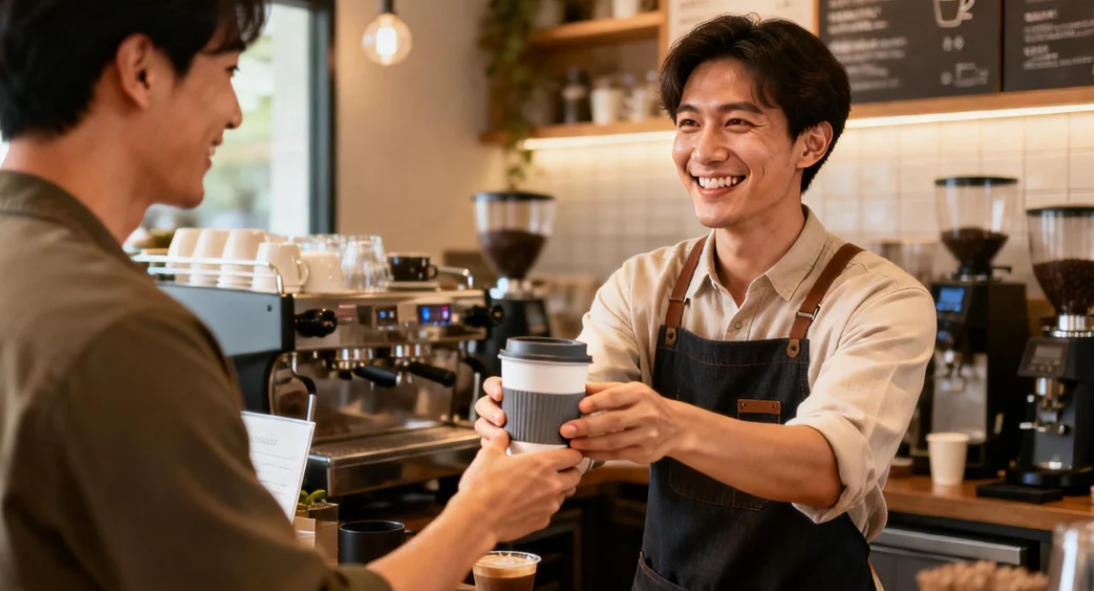
Navigate with Confidence: Use apps like Meituan or community maps to locate "BYO Cup-friendly" cafes-10. Don't be shy to ask your local barista if they accept personal cups and offer a discount—many do.
Embrace Imperfection: Forgetting your cup once doesn't mean failure. Some innovative services, like Taiwan's (Water for All), offer apps that map over 13,000 public water refill stations, helping you stay hydrated without single-use bottles when you're in a pinch
Conclusion: The Ripple in Your Cup
Choosing a reusable cup is a deceptively simple act with profound resonance. It is a personal vote against disposable culture, a direct reduction in your carbon and plastic footprint, and a step towards a circular economy. Every time you present your cup, you're not just asking for coffee; you're signaling market demand for sustainable practices, inspiring those around you, and contributing to a collective force for change.
The journey to sustainability is paved with daily, conscious choices. It begins with awareness, is sustained by convenient systems and supportive communities, and culminates in transformed norms. So, the next time you reach for a drink, remember the power you hold—quite literally—in your hands. Fill your cup with your beverage of choice, and let it also be filled with the promise of a cleaner, more thoughtful world.
What’s your reusable cup story? Share your favorite brand or a tip that helped you make the habit stick with the community using #MyReusableJourney.
 5 Must-Know Features When Choo
 The Global Journey of a Water
 100 Copper Mugs: Stylish Pure
 Top 10 Ounce Coffee Cups: Size